Best local leak, contact, and environmental sensors
Practical sensor picks for local-first homes, covering water leaks, door and window status, cheap environmental monitoring, and Z-Wave window sensors with long battery life, without cloud nonsense.
On this page
- Quick verdict
- How I judge simple sensors
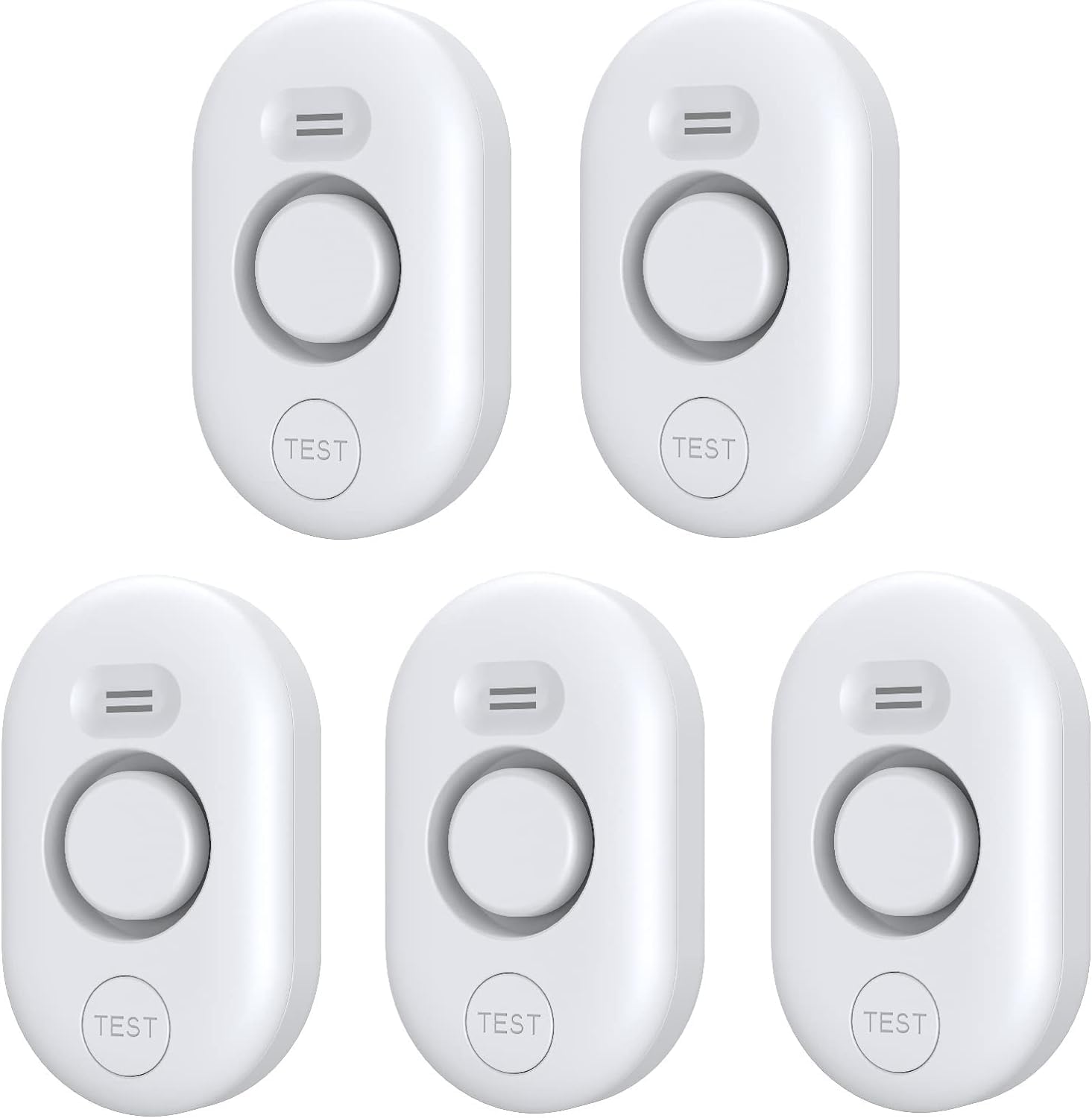
- Best “buy several right now” pick: Third Reality Water Leak Sensor
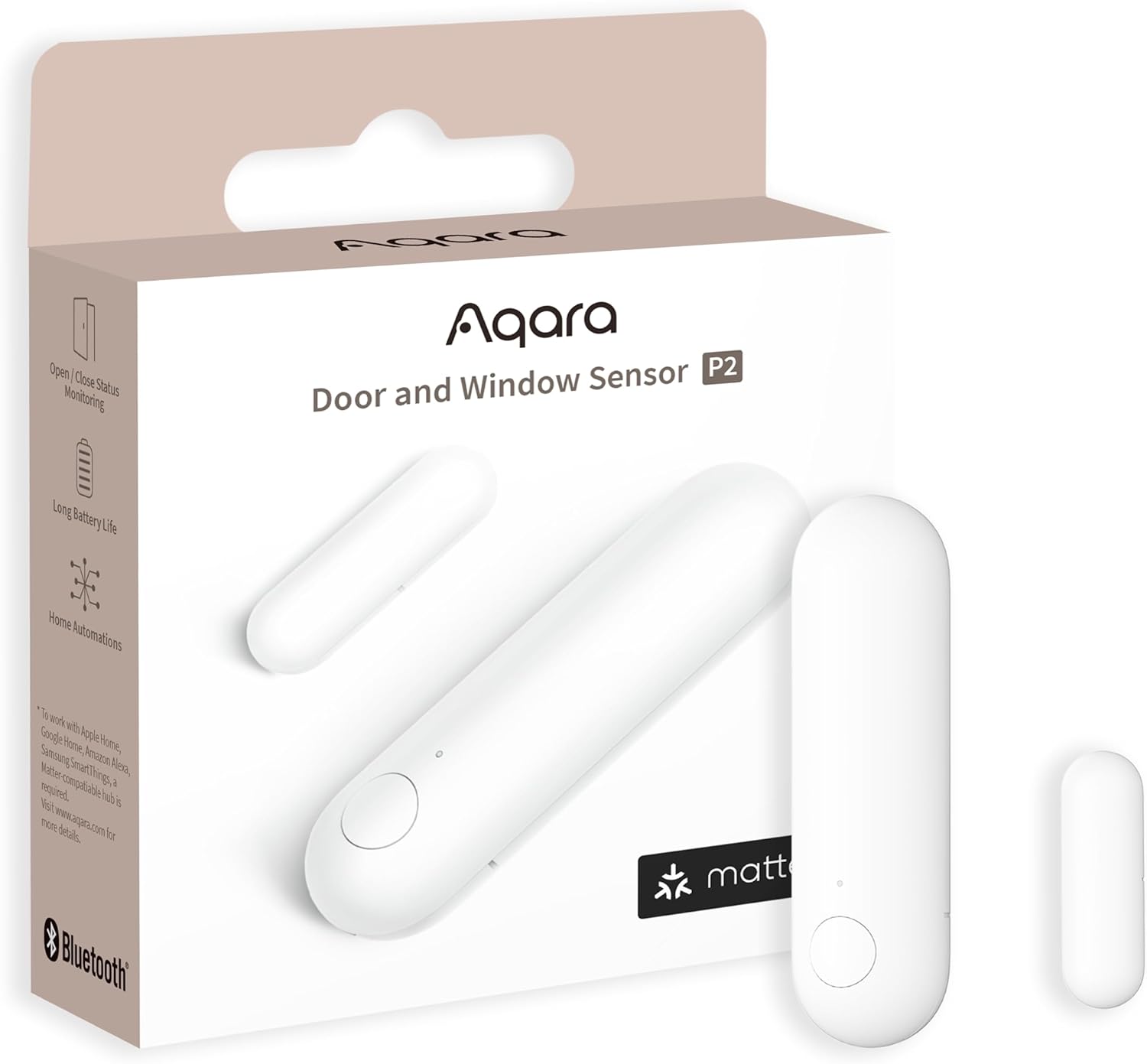
- Best contact sensor: Aqara Door and Window Sensor P2
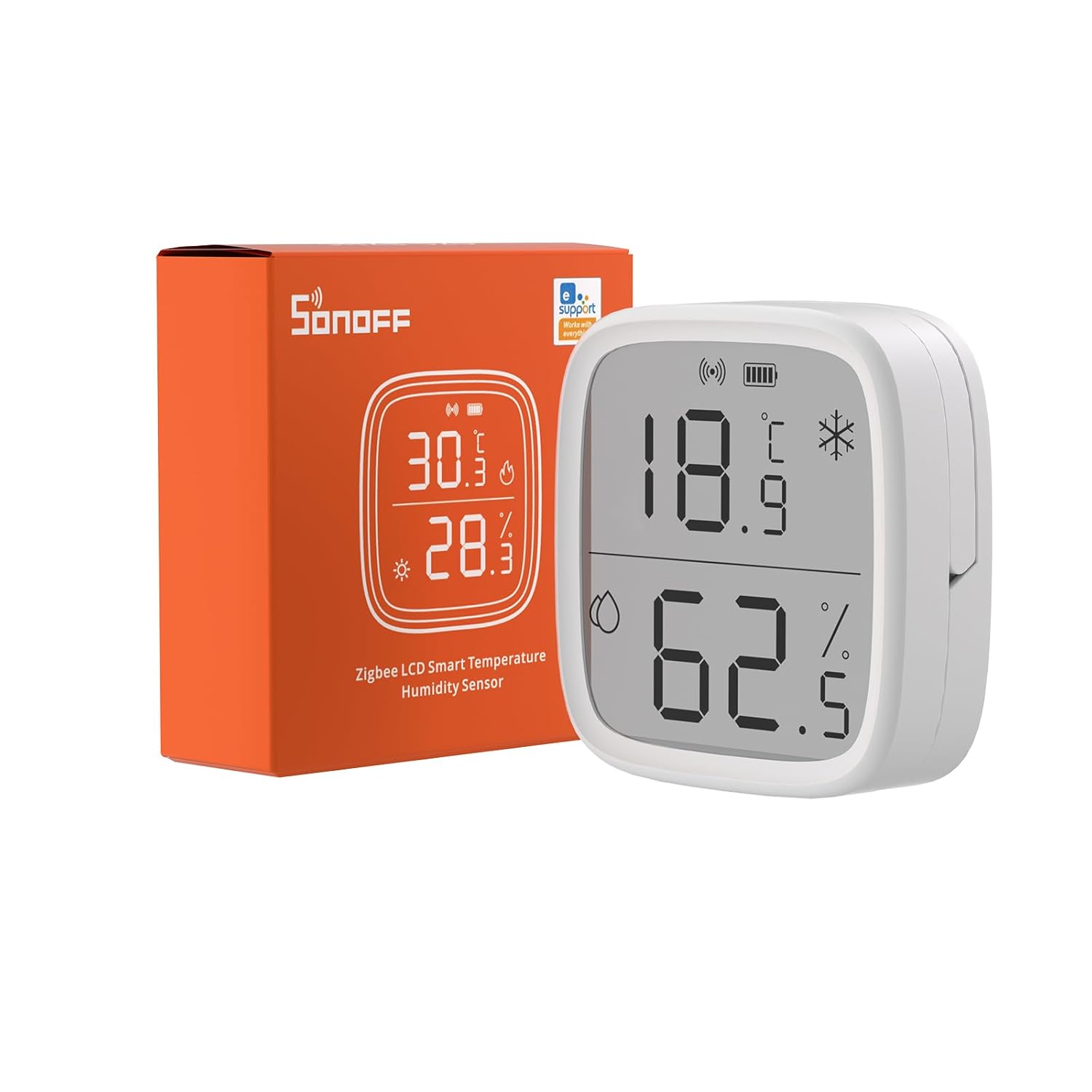
- Best cheap room sensor: SONOFF SNZB-02D
- Filling in the gaps: more sensors worth knowing
- Z-Wave window sensors with long battery life
- What to avoid
A smart home gets useful when the house notices boring important things early. Fancy dashboards don’t do that.
That usually means three sensor jobs:
- catch leaks before they become expensive
- know whether doors and windows are open
- track temperature and humidity in rooms that matter
The sensors worth buying first are the Third Reality Water Leak Sensor as the budget leak sensor, the Aqara Door and Window Sensor P2 as the all-purpose contact sensor, and the SONOFF SNZB-02D as the cheap environment sensor with a display.
Quick verdict
If you only buy one class of sensor after motion and presence, buy water leak sensors first. They prevent real damage, and they don’t require clever automations to justify themselves.
For leak alerts, the Third Reality Water Leak Sensor is the most immediately useful thing on this page.
For general door and window state, Aqara Door and Window Sensor P2 is the most flexible buy.
For room temperature and humidity without spending much, SONOFF SNZB-02D is the easy value play.
How I judge simple sensors
The standards are harsher than the boxes suggest.
I care about:
- True local operation
- Battery life and reliability
- How well the sensor fits Zigbee2MQTT or ZHA
- Whether the device solves a real household problem
- Whether buying several of them is financially sane
Best “buy several right now” pick: Third Reality Water Leak Sensor
Leak sensors aren’t glamorous, but they’re the kind of smart-home gear that can pay for themselves in one incident.
Why this is the first recommendation:
- cheap enough to scatter around the house
- fully local Zigbee behavior
- good fit for Home Assistant alerts and automations
- ideal for sinks, water heaters, laundry areas, and anywhere plumbing likes to become a surprise
The limitation is simple: it detects leaks. It doesn’t shut water off by itself. That is still fine: an alert while the puddle is small is most of the value. I haven’t run this one; the pick is based on the spec sheet and other owners’ write-ups.
Best contact sensor: Aqara Door and Window Sensor P2
Contact sensors do a lot of quiet work in a useful smart home.
The Aqara Door and Window Sensor P2 stands out because it’s compact, reliable, and more flexible than a lot of budget contact sensors.
Why it makes sense:
- native Matter-over-Thread connection, no manufacturer hub or bridge required
- strong cross-ecosystem story: joins Home Assistant, Apple Home, Google Home, Alexa, or SmartThings over Matter
- easy bulk deployment for doors, windows, cabinets, and garage side doors
The caveat is that it needs a Thread border router (a HomePod mini or second-generation HomePod, a Thread-capable Apple TV 4K, or Home Assistant’s own Thread support), so it is not a fit if you have no Thread network and do not want to add one.
Best cheap room sensor: SONOFF SNZB-02D
The SONOFF SNZB-02D is the kind of low-cost sensor that makes a Home Assistant setup feel more observant without becoming a project.
Why it earns the spot:
- fully local Zigbee support
- built-in display means the data is visible without opening an app
- inexpensive enough to place in bedrooms, nurseries, offices, and utility spaces
It’s useful room data for very little money, and nothing flashier than that. I haven’t run the SNZB-02D myself; the Aqara Temperature and Humidity Sensor does that job in my house, and this pick rests on the spec sheet and what I’ve read from people who own one.
Aqara and Sonoff price and build these small sensors very differently, and Shelly comes at some of the same jobs over Wi-Fi and Bluetooth instead of Zigbee. Shelly vs Sonoff vs Aqara lays out where each one wins.
Filling in the gaps: more sensors worth knowing
The three picks above cover the common cases. A few others are worth knowing about because they solve a specific problem the defaults do not.
If you already run a Shelly BLU gateway or an ESPHome Bluetooth proxy, Shelly’s Bluetooth sensor line becomes very cheap coverage. The Shelly BLU Door/Window reports open and closed state, and the Shelly BLU Motion adds an ambient light reading alongside PIR motion. Neither touches a cloud, but both need that gateway or proxy within Bluetooth range to reach Home Assistant, so they only make sense once that piece is already in place.
For room climate without running a Zigbee coordinator at all, the Shelly H&T Gen3 is a battery-powered Wi-Fi sensor with an e-ink display that reports temperature and humidity over your local network through the native Shelly integration. The display means you can read the room without opening an app. Keep the reporting interval sensible or battery life suffers.
On the Z-Wave side, the Aeotec TriSensor 8 (ZWA045) puts motion, temperature and light level in one small CR123A-powered body, on 800-series silicon with SmartStart onboarding, S2 security and Z-Wave Long Range. There is no humidity sensor, and heavy reporting shortens battery life, but it is a tidy way to cover a room with a single device on Z-Wave JS.
For contact sensing in Europe, the frient Entry Sensor 2 Pro is a well-made Zigbee door and window sensor that pairs to ZHA or Zigbee2MQTT and stays entirely local.
Z-Wave window sensors with long battery life
Z-Wave is a solid choice for window and door contact sensors in a local-first house: it runs entirely on your own hardware, with no cloud account required. The catch is maintenance. A sensor stuck on a hard-to-reach window is only worth it if you’re not changing batteries every year. For the longest hands-off life, the Sensative Strips Guard 800, accepting that it’s disposable at end of life. For a replaceable battery with a multi-year interval, the Aeotec Door / Window Sensor 7 is the most balanced pick. On a budget, the Zooz ZSE41 is cheap and easy to maintain even though its coin cell needs more frequent swaps. I haven’t run any of these five sensors; the picks rest on the manufacturers’ battery ratings and what people running them in Home Assistant report.
A Z-Wave contact sensor is a simple magnetic reed switch: one part on the window frame, a magnet on the sash. When the gap opens, the sensor wakes up and reports the change to your hub. To use these with Home Assistant you need a Z-Wave controller plugged into your server, running through the Z-Wave JS integration: the Home Assistant Connect ZWA-2 or a Zooz 800-series USB stick (see how to pick a Z-Wave controller in 2026). Once the integration sees your stick, you pair sensors directly to it.
A few facts worth being clear about. These are Z-Wave devices, not HomeKit-native: they reach Home Assistant through Z-Wave JS, not through Apple’s ecosystem, and while you can expose them to HomeKit afterward from Home Assistant, the sensor itself doesn’t speak HomeKit. Battery-powered contact sensors do not repeat the Z-Wave mesh; only mains-powered Z-Wave devices act as routers, so if you have coverage gaps, fix them with a mains-powered plug or switch, not by adding more battery sensors. And modern silicon is 500, 700, or 800 series, with the 700 and 800 series being the current generations and what you want for the best range and power efficiency.
Sensative Strips Guard 800
If battery life is your single highest priority, the Sensative Strips Guard 800 is the standout. It’s an ultra-thin (about 3mm) Z-Wave 800 strip with a sealed, non-replaceable battery rated for up to 10 years. The thin form factor lets it hide inside the window frame gap, and it’s rated for outdoor use. The caveat: that 10-year figure is a best case, and real-world results vary with temperature and reporting frequency. Because the battery isn’t replaceable, the whole unit is disposable at end of life.
Zooz ZSE41 Open | Close (700 / 800LR)
The Zooz ZSE41 is a small, inexpensive open/close sensor available in a 700-series version and an 800-series Long Range version (ZSE41 800LR). It runs on a single CR2032 coin cell. Battery life is more modest here, roughly a year or so of typical use, and Zooz recommends Energizer, Panasonic, or Maxell cells (avoid Duracell, whose coating can prevent good contact). It’s a good budget pick where the coin cell’s easy, cheap replacement offsets the shorter interval.
Aeotec Door / Window Sensor 7
The Aeotec Door / Window Sensor 7 (model ZWA011) is a 700-series contact sensor powered by a 1/2 AA (ER14250) lithium cell, rated for about 3 years at five open and five close events a day with wakeup reports disabled. Check the model number before you order: Aeotec also sold a 500-series sensor under the same Door / Window Sensor 7 name (ZWA008), and old listings for it are still in circulation. The half-AA chemistry gives it a longer interval than coin-cell sensors while keeping a replaceable battery. There’s also a Pro variant (ZWA012) that adds a dry-contact binary input and tilt detection.
Ecolink Door/Window Sensor (DWZWAVE2.5)
The Ecolink DWZWAVE2.5 is a long-standing, no-frills Z-Wave Plus contact sensor. It uses a CR123A lithium battery rated for up to about 3 years. It’s bulkier than the others here, but it’s reliable, widely available, and the CR123A is easy to source. A good choice when you want something proven and don’t mind the larger housing.
Fibaro Door/Window Sensor 2 (FGDW-002)
The Fibaro Door/Window Sensor 2 is a compact Z-Wave Plus sensor with a built-in temperature sensor, powered by an ER14250 (1/2 AA) cell rated for roughly 2 years. Battery life is the shortest in this group, but the built-in temperature reading and small size make it appealing if you want one device doing double duty per window.
Battery life isn’t the only thing that matters. The longest-lived option, the Sensative Strips Guard 800, trades a replaceable battery for that decade-long rating, so when it dies you replace the whole sensor. Coin-cell sensors like the Zooz ZSE41 need new cells more often, but those cells are cheap and take seconds to swap. The Aeotec and Ecolink land in the middle with multi-year lithium cells you can replace. Whatever you pick, remember the mesh caveat: these battery sensors don’t extend Z-Wave range. If a sensor pairs poorly or drops off, add a mains-powered Z-Wave device nearby to act as a router rather than blaming the sensor.
What to avoid
Avoid sensor shopping that chases ecosystem badges before basic reliability.
A sensor that works locally, reports consistently, and doesn’t chew through batteries is usually more valuable than a flashier product that only looks good in the vendor app.
Also: don’t buy exactly one leak sensor. That misses the point. Buy them in multiples and place them anywhere water might quietly ruin your week.
Once the basics are covered, a few adjacent sensing jobs have their own pages: building a noise monitor with an ESP32 and an I2S microphone, local aquarium monitoring with real analog water probes, and, once room temperature is worth acting on rather than just graphing, smart thermostats for local-first homes.