Amazon links are affiliate links: as an Amazon Associate I earn from qualifying purchases, at no extra cost to you. Links to makers' own stores and other retailers are plain links that earn me nothing.
Quick verdict
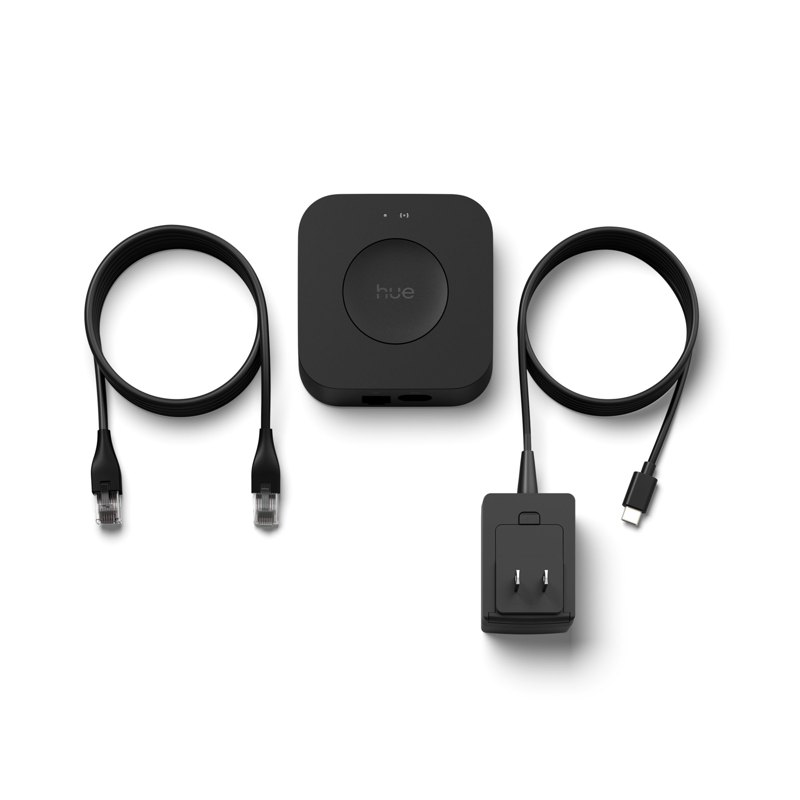
The Hue Bridge is the reason Hue lights work so well with Home Assistant. Its local push API means state changes show up in HA almost instantly, no cloud round-trip needed. It also bridges Hue devices to Matter, so Apple Home and Google Home get the same reliable experience. The downside is it is built around Hue devices; third-party Zigbee support is limited to some certified lights. If you are going Hue for lighting, the bridge is worth it over pairing bulbs directly to a generic coordinator. One thing that changed since this page was written: Hueblog reports that all new Hue lights, bulbs and strips (September 2025 onward) also support Matter over Thread, so a new bulb can join Home Assistant through a Thread border router with no Bridge at all; gradient products still need the Bridge and the Hue app for their gradient features.
Standout: Local push API gives Home Assistant near-instant light state updates without polling or cloud.
Notes last checked Sep 10, 2026.
Compatibility snapshot
Home AssistantexcellentFull local control, no cloud needed. Native Home Assistant integration or a local protocol.
Apple HomeexcellentFirst-class native support on this platform.
Google HomeexcellentFirst-class native support on this platform.
AlexaexcellentFirst-class native support on this platform.
Works offlineyes
Setupeasy
Extra hub neededno
Powermains
Local control facts
Home Assistant: hue integration, Local Push (home-assistant.io, checked Oct 10, 2026)
Matter: certified (csa-iot.org, checked Nov 6, 2026)
Home Assistant's native Hue integration uses local push, making it one of the fastest and most reliable integrations available
Matter bridge support exposes Hue devices to any Matter controller without extra work
dependable Zigbee mesh that has been refined over a decade of production use
Reasons to hesitate
built around Hue devices - some third-party Zigbee 3.0 lights pair with basic functions only, and it cannot act as a general Zigbee coordinator for sensors or other devices
adds another box and power adapter to your setup
the Hue app is needed for initial device pairing and firmware updates
Best for
anyone building a Hue lighting setup who wants excellent Home Assistant integration out of the box
households that need Apple Home, Google, Alexa, and Home Assistant to all work reliably with the same lights
Avoid if
you want a general-purpose Zigbee coordinator for non-Hue devices
you plan to pair Hue bulbs directly to zigbee2mqtt or ZHA and skip the bridge entirely
Privacy and local-control notes
The Hue Bridge runs a local API that Home Assistant uses directly via push events. No cloud needed for day-to-day control. The Hue app phones home for firmware updates and remote access, but those are optional.
Home Assistant 2026.11 builds HACS in as the Marketplace, reworks entity names and adds Matter cameras. What breaks, and whether to wait for 2026.11.1.
Hue firmware 1.164.2 lets newer bulbs speak Zigbee and Matter together, Ring's first smart lock runs on Sidewalk with no Matter, and ESPHome over Zigbee.
Home Assistant 2026.10: trigger IDs get a point-and-click UI, SolarEdge gets a local Modbus integration, and Home Assistant Cloud becomes Link in December.
Hue's Bridge Pro is $149.99 and the Bridge $79.99 on Hue's US store, after two rises this year. What the premium buys a Home Assistant or Apple Home house.
Matter bridge, native Matter device, or Zigbee on your own coordinator: which to pick for a local Home Assistant setup, and what a bridge can and cannot do.
Hue's bridge prices went up: which bridge a local house needs
Hue's Bridge Pro is $149.99 and the Bridge $79.99 on Hue's US store, after two rises this year. What the premium buys a Home Assistant or Apple Home house.