Home Assistant vs Hubitat
Which local-first hub is better depends on whether you want maximum flexibility or a more appliance-like smart home experience. Hardware, radios, integrations and performance compared.
On this page
Home Assistant is the better platform for most ambitious local-first setups, while Hubitat is the easier fit for buyers who want a more appliance-like hub.
That sounds tidy, but the real difference is about what kind of smart home owner you are going to be six months from now. Both keep your automations running locally without leaning on a vendor’s cloud, and both keep working when the internet doesn’t. They take very different routes to get there. If you’re still comparing hubs more broadly, the best local-first smart home hubs roundup covers the wider field.
The short version
- Choose Home Assistant if you want the broadest integrations, better dashboards, more long-term flexibility, and a system that can become the center of your home.
- Choose Hubitat if you want a capable local hub with less temptation to tinker and a simpler mental model.
If you are highly likely to care about cameras, energy dashboards, presence logic, custom automations, mixed-brand setups, or weird edge-case integrations, the answer tilts toward Home Assistant fast.
If you mainly want local Zigbee and Z-Wave automations with fewer moving parts and less infrastructure sprawl, Hubitat becomes a much more respectable answer.
What you are buying
Home Assistant is free, open-source software you run on your own hardware. It gives you the most flexibility and the largest integration library of anything in this space, at the cost of a steeper learning curve. Hubitat Elevation is a commercial appliance: you buy the box, plug it in, and it runs local automations out of the gate with far less setup.
Home Assistant: maximum control, more effort
Because Home Assistant is software, you choose the hardware: a Raspberry Pi 5, a small x86 box like an Intel NUC, a purpose-built Home Assistant Green, or a Linux server you already own. You get a huge integration ecosystem and deep automation tooling.
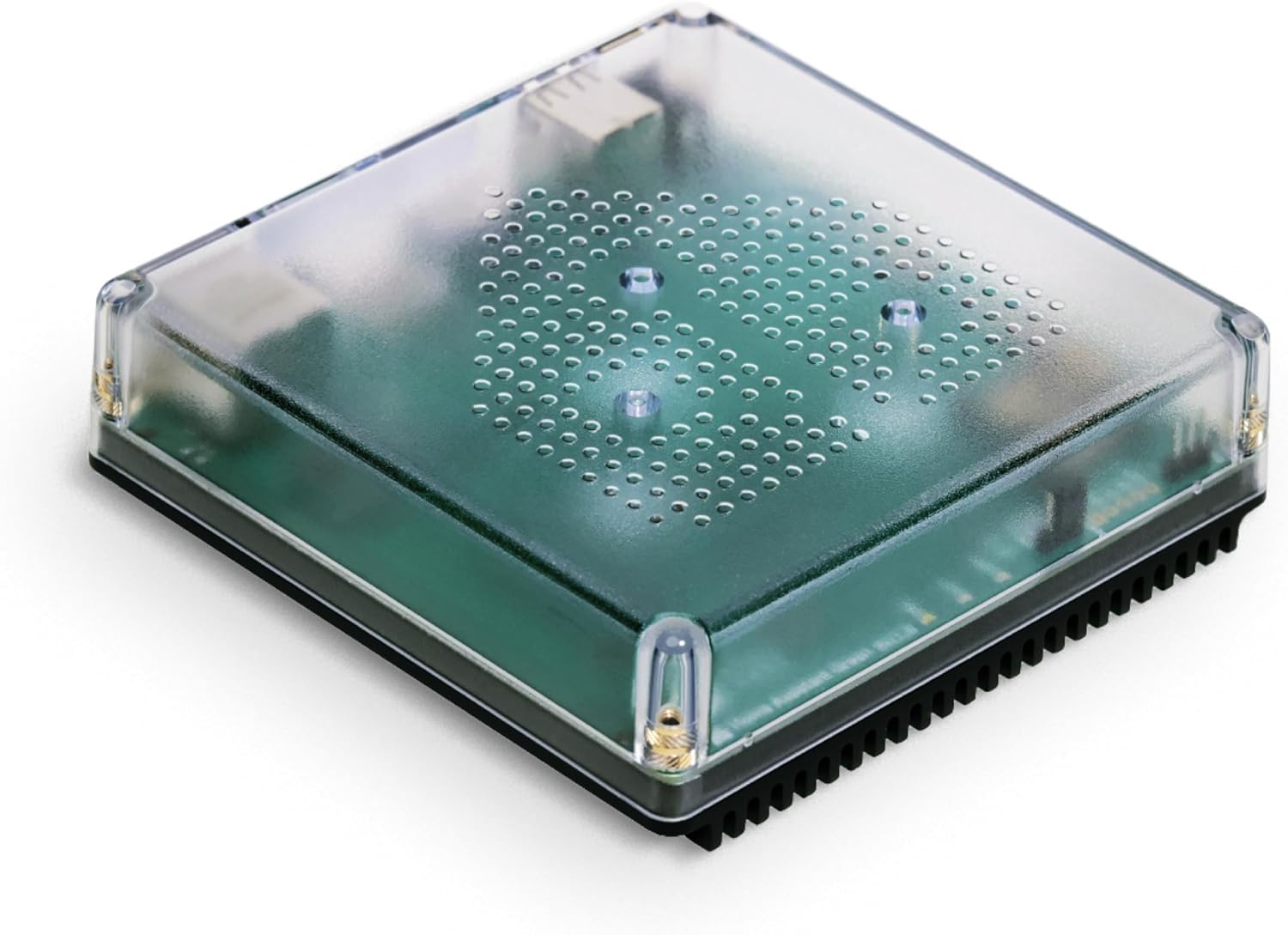
Home Assistant has no built-in Zigbee or Z-Wave radio on its own; those protocols need a USB coordinator. The Home Assistant Connect ZBT-2 covers Zigbee or Thread - you flash it for one protocol at a time, not both at once - and a separate USB stick covers Z-Wave. Wi-Fi devices like the Shelly 1 Mini Gen3 (a Wi-Fi relay, controllable locally over the local API or MQTT) connect without any radio dongle at all.
The tradeoff is real: you manage your own host, handle updates, and do more configuration. If you’re comfortable with that, nothing else matches the flexibility.
Hubitat: less setup, tighter box
Hubitat Elevation is a dedicated hub aimed at people who want local automation without running a server. The current model is the Hubitat Elevation C-8 Pro: built-in Zigbee 3.0, Z-Wave 800 Long Range and Matter radios, plus Bluetooth, Wi-Fi and Ethernet, with every automation running on the device itself. It lists at $184.95. Hubitat also sells a $249.95 Thread Special Edition of the Pro, but that version swaps the Zigbee radio out for Thread, so it is the wrong buy if you own Zigbee devices. Hubitat said in March 2026 that the Pro is now the only hub it manufactures, so the older Hubitat Elevation C-8 (same radios, 1.4 GHz CPU and 1 GB RAM instead of 2.0 GHz and 2 GB) is an existing-owner or used-market option rather than a new buy. Remaining plain C-8 stock is reserved for warranty replacements, so a new Hubitat in 2026 means the Pro.
Hubitat’s strength is that everything runs locally by default with no extra subscription, and its built-in rule engine lets you build automations through a UI rather than YAML. The downside is a smaller integration catalog than Home Assistant and a closed platform: you don’t get to swap the underlying hardware, and community drivers fill gaps that Home Assistant often covers natively.
Where Home Assistant wins
Broader integration depth
Both hubs support Z-Wave, Zigbee, and (increasingly) Matter, so most mainstream devices work on either. The differences are at the edges, and that is where Home Assistant is the strongest common denominator in the local-first world. It connects to more devices, more services, more cameras, more dashboards, and more oddball hardware than Hubitat: thousands of integrations, including many cloud and niche devices Hubitat never adds. Wi-Fi gear like Shelly relays integrates locally over MQTT or the Shelly integration. For leak protection, the frient Water Leak Detector is a solid Zigbee option that reports locally through the ZBT-2 coordinator. If a device exists, there’s a good chance Home Assistant can talk to it, even if it takes a community integration to get there.
That matters because real homes drift. You start with plugs and sensors, then add a camera, a lock, a thermostat, a weird relay, a power dashboard, or a vendor ecosystem that was never part of the original plan.
Better long-term ceiling
If you care about advanced dashboards, energy monitoring, local camera projects, custom automations, presence logic, and highly mixed ecosystems, Home Assistant gives you much more room. For a lot of readers, that room is the whole point.
Better fit for the kind of buyer who researches this stuff deeply
If this site has your attention for the right reasons, there is a decent chance you are already the sort of buyer who will eventually want what Home Assistant is better at. That does not mean Hubitat is bad. It means Home Assistant is usually the stronger long-term home for smart home nerds who know they are going to keep expanding.
Where Hubitat wins
Lower complexity
Hubitat is easier to understand as a self-contained hub. That matters if you want local automations without adopting Home Assistant as an ongoing hobby or infrastructure layer.
Better appliance feel
Hubitat feels more like buying a hub and less like adopting a platform. Some buyers want exactly that, and for them it is the feature they are paying for.
Curated, local-by-default device support
Hubitat focuses on devices it can drive locally and reliably. Its built-in driver set covers the common Zigbee and Z-Wave catalog well, and because automations run on-box, response times are fast and survive internet outages. For Zigbee and Z-Wave households, it is a practical appliance-style controller that doesn’t make you think as much about hardware layers, add-on radios, or dedicated boxes. For wired alarm and sensor work, the Konnected Alarm Panel Pro integrates with both platforms and is a common way to bring a legacy wired security system into a local hub.
The Hubitat experience is more curated: fewer integrations, but the ones it ships tend to “just work.”
Performance and reliability
Home Assistant’s performance tracks the hardware you give it. A Raspberry Pi 4 handles a modest setup fine but can feel slow with hundreds of entities and heavy add-ons. A Pi 5, a Green, or a small x86 box gives plenty of headroom. Because you control the host, you can scale up when you outgrow it.
Hubitat runs fixed hardware tuned for the job, so performance is predictable. Automations execute locally in milliseconds and keep running through internet outages. Very large or unusual setups can hit the box’s limits, but for typical homes it’s stable and responsive without tuning.
Ceiling versus simplicity
Both platforms take local automation seriously, which is why this comparison exists in the first place. Both can run a smart home that keeps working when the internet is having a bad day. But they do not feel the same to live with.
- Home Assistant is the more expansive local-first platform.
- Hubitat is the more constrained local-first appliance.
Since both sides have local control covered, the tradeoff you are weighing is ceiling against simplicity.
Which one I would pick for different buyers
Pick Home Assistant if…
- you want the strongest ecosystem flexibility
- you plan to add cameras, dashboards, presence sensing, or energy monitoring
- you are comfortable with a bit more learning in exchange for a better long-term result
- you expect the smart home to grow into a whole system rather than a few rules
Pick Hubitat if…
- you want fewer moving parts
- you care more about stability and simplicity than endless expansion
- you want a local hub without making Home Assistant the center of the house
- you mostly want reliable automations for common Zigbee / Z-Wave devices
The easy mistake to avoid
Do not buy Hubitat because you are afraid Home Assistant is “too advanced” if you already know you are the kind of person who will outgrow a narrower hub.
Do not buy Home Assistant just because the internet says it is the smartest answer if what you really want is a more appliance-like local system with less surface area.
A lot of buyer regret in smart homes comes from pretending you are a different kind of owner than you actually are.
My practical recommendation
If a friend asked me which platform has the better long-term upside, I would say Home Assistant without hesitation.
If they said they specifically want a more appliance-like local hub and do not want as much tinkering surface area, I would say Hubitat, bought as the C-8 Pro.
If they are still at the very beginning and mostly want the strongest default path, I would usually steer them toward Home Assistant Green before I would steer them toward a more niche hub strategy. Budget for one extra part if you do: unlike the Hubitat, the Green has no built-in radios, so Zigbee or Thread devices need a USB stick such as the Home Assistant Connect ZBT-2, and Z-Wave needs its own 800-series stick.
If you already know you want Home Assistant and are now stuck choosing hardware, read Home Assistant Green vs Yellow next. If you’re coming from a cloud-leaning hub, my notes on Cloud automations vs local: why I moved to Home Assistant explain what pushed the move to a local-first platform.