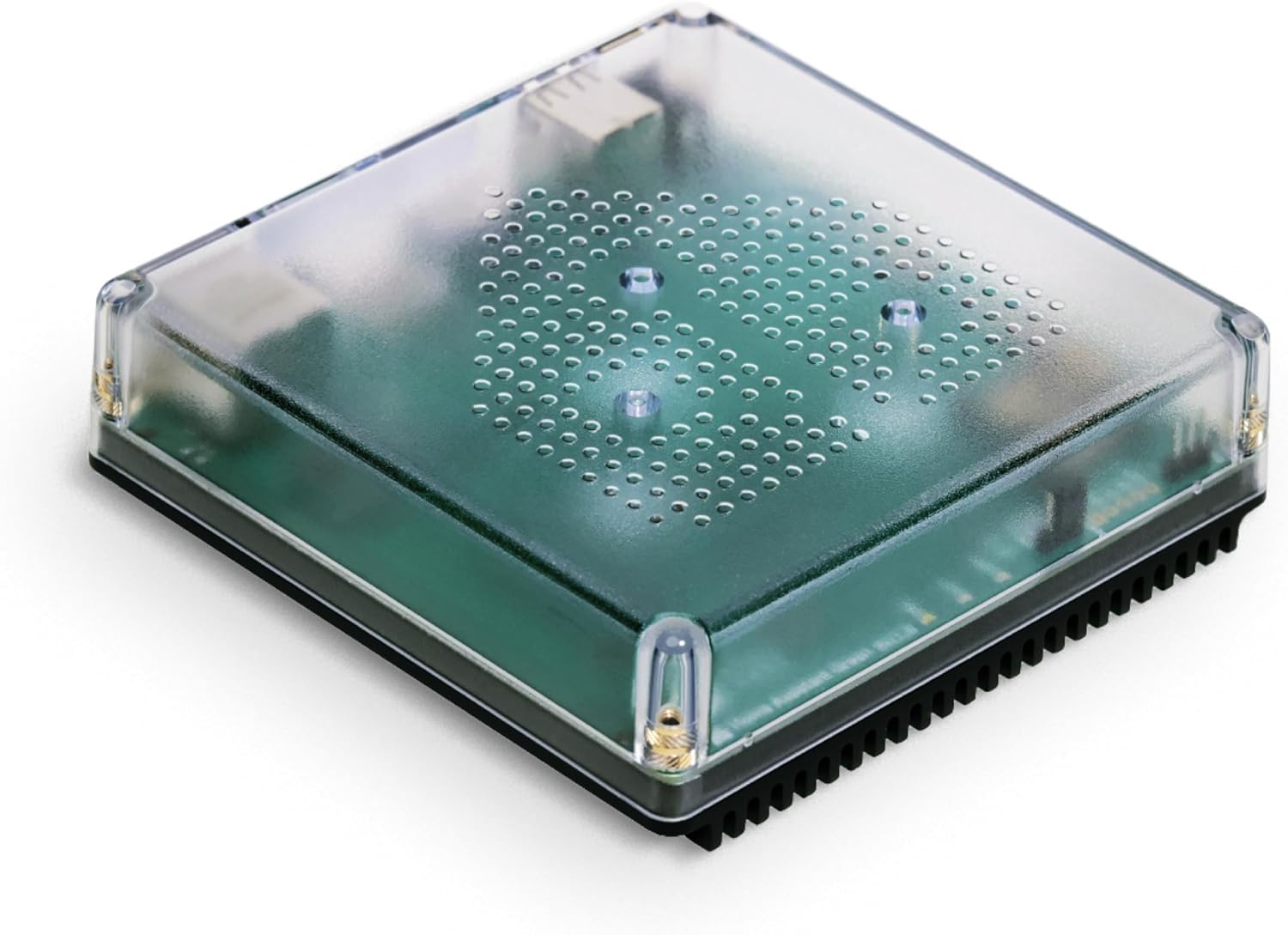
Home Assistant Green vs Yellow vs mini PC
Yellow is discontinued. Home Assistant Green is the plug-and-play default; an N100 mini PC is the alternative when you want headroom for Frigate.
On this page
Important: Home Assistant Yellow was discontinued in October 2025. Nabu Casa is no longer manufacturing it. If you see one for sale on eBay or similar, it still works and will receive software updates, but it’s no longer a recommended purchase for new buyers.
The real decision in 2026 is Green vs a mini PC.
The quick answer
- Buy Home Assistant Green (~$199) if you want the easiest path into Home Assistant. Plug it in, connect Ethernet, and you’re running in minutes.
- Buy an Intel N100 mini PC (~$150-$200) if you want more headroom for cameras, NVR, or other services alongside Home Assistant.
Why Green wins for most buyers
Lowest friction
Green is the official Nabu Casa plug-and-play box. No OS installation, no BIOS menus, no terminal commands. You’re running Home Assistant within minutes of unboxing.
Enough for a lot of homes
Rockchip RK3566, 4GB RAM, 32GB eMMC. Plenty for dozens of devices, complex automations, and most integrations. A lot of households don’t need more than this.
Better beginner value
If you’re still figuring out your devices, protocols, and automations, Green gets you into a serious Home Assistant environment without pushing you toward premature complexity.
The one thing the Green does not have: a radio
The Green cannot talk to Zigbee, Thread or Z-Wave devices on its own. For Zigbee or Thread you add a USB coordinator such as the Home Assistant Connect ZBT-2 (roughly $49; it succeeds the discontinued ZBT-1, which still works if you already own one), and Z-Wave needs a separate stick regardless. Wi-Fi and Matter-over-Wi-Fi devices work with no dongle at all. Budget for the stick when you compare prices, because it is the same add-on a mini PC or a Raspberry Pi needs.
When a mini PC makes more sense
An N100-based mini PC (Beelink EQ13, GMKtec G3, etc.) gives you far more headroom for a similar price: 8-16GB RAM, 128-500GB SSD, and enough CPU for Frigate NVR with camera AI. Both vendors have since moved these lines on to N150 chips, and that matters when you go to buy: the Beelink EQ13 is discontinued and I could not find it in stock anywhere, so shop the current Beelink EQ14 or the GMKtec G3 Plus instead. My best mini PC for Home Assistant roundup walks through the tiers in more detail.
Choose a mini PC if you:
- plan to run Frigate, Node-RED, Grafana, or other services
- want processing power that won’t need upgrading for years
- are comfortable flashing HAOS to a USB stick (it’s not hard, but it’s one more step)
What about a Raspberry Pi 5?
The Pi 5 used to be the cheap do-it-yourself answer, and it is still the fastest of the small boards. Its Broadcom BCM2712 (quad-core Cortex-A76 at 2.4 GHz) is meaningfully quicker than the Green’s RK3566 or a CM4-based Yellow, it comes with up to 16 GB of RAM, and its PCIe 2.0 interface takes an NVMe HAT so you can boot from a fast SSD instead of a microSD card.
What changed is the price. Repeated memory-driven increases between December 2025 and April 2026 took the board from $60 (4 GB) and $80 (8 GB) at launch to $110 and $175, with the 16 GB model at $305 (Raspberry Pi list prices, checked 2026-09-06). Add a power supply, a case, storage and a Zigbee stick and an 8 GB Pi 5 build costs more than a Green, and lands in the same range as an N150 mini PC that has more CPU, more RAM and an SSD in the box. Like the Green, the Pi 5 has no smart-home radio of its own, so you supply the USB coordinator and, if you need it, a Z-Wave stick.
Pick a Pi 5 if you specifically want a Pi - the GPIO, the form factor, one already in a drawer - and don’t mind assembling the pieces. If you want headroom, the mini PC is the better buy; my Raspberry Pi vs mini PC comparison goes deeper on that pair.
What about Yellow?
Yellow ran on a Raspberry Pi Compute Module (a CM4 or CM5, sold separately) and had a built-in Zigbee/Thread radio (Silicon Labs chip soldered on the board), NVMe expansion, and, on the separate Kit with Power-over-Ethernet only, PoE. The standard Yellow and the standard kit are barrel-jack powered. It was the enthusiast’s choice before Nabu Casa discontinued it. The discontinuation was not a verdict on the hardware: Nabu Casa said sales had slowed to the point where another production run no longer made sense, and that more people are gravitating toward mini PCs for this job.
Two limits of that built-in radio matter if you are weighing a used one. It speaks Zigbee or Thread, one firmware at a time: you pick a protocol and reflash the radio to switch, and running both means adding a second radio such as a ZBT-2 (Home Assistant’s experimental multiprotocol mode that ran the two at once is deprecated and slated for removal). And Z-Wave was never built in, so a Z-Wave house adds a USB stick on a Yellow just as it would on a Green.
If you find a used Yellow at a reasonable price, it’s still a solid piece of hardware. Check whether the listing includes a Compute Module, because a bare board needs one before it will boot, and check whether it is the PoE kit if you want PoE. The software will keep getting updates. But don’t pay a premium for old stock. A used one is defensible if you specifically want built-in Zigbee/Thread, NVMe and optional PoE in one tidy box and the price is fair; I wouldn’t go hunting for one. A mini PC with a USB coordinator gives you more power for less money. Whichever box you land on, the first time Home Assistant setup guide covers the day-one steps.