Affiliate link - I may earn a commission at no extra cost to you. As an Amazon Associate I earn from qualifying purchases; some links go to other retailers with the same arrangement.
Quick verdict
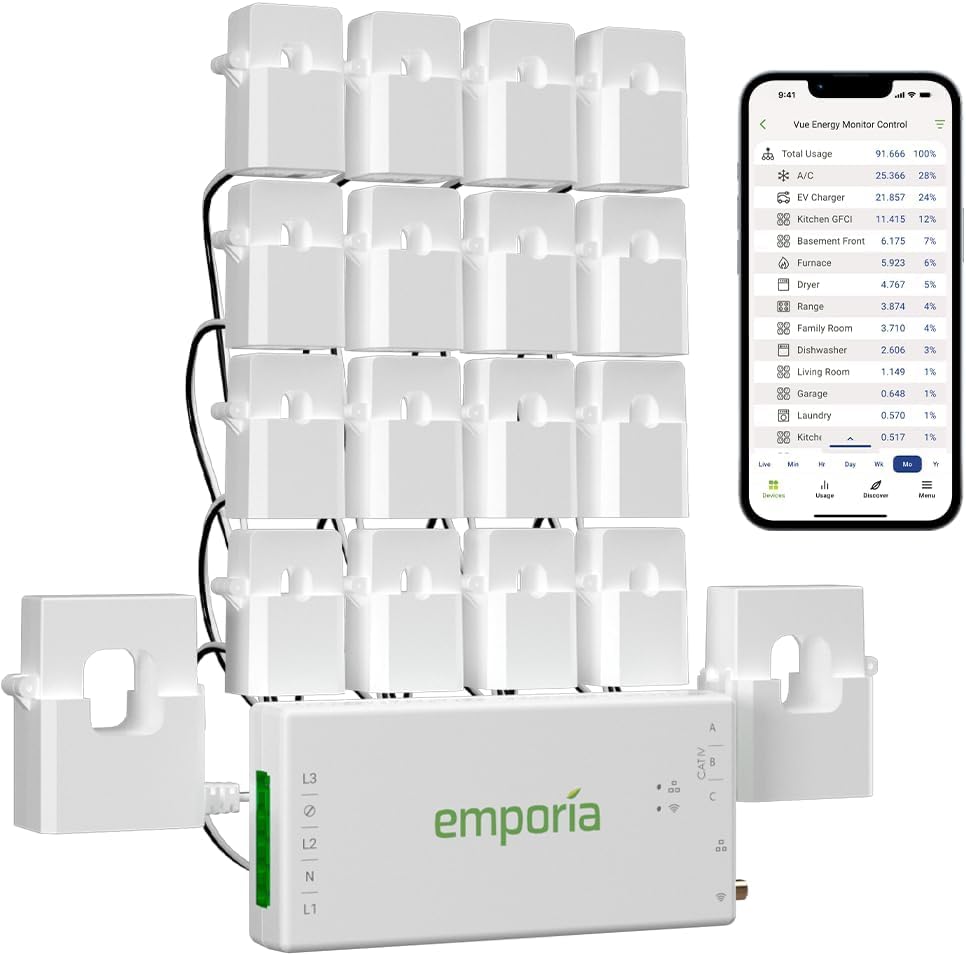
The Vue 3 is the usual North American answer for circuit-level monitoring: two 200A mains CTs plus 8 or 16 50A branch clamps in one panel-mounted unit, with Wi-Fi or wired Ethernet. Out of the box it is a cloud product - Emporia states the monitor needs an active internet connection and stores no data locally, and there is no official Home Assistant integration, so the stock path is a community HACS integration talking to Emporia's cloud API. The local-first route is to reflash it with ESPHome, which turns it into fully local Home Assistant sensors; that first flash is a wired serial job on the board's UART pads, and only later updates go over Wi-Fi. Rated okay stock; excellent only if you take the ESPHome route.
Standout: Branch-circuit monitoring at a low price, with an ESP32 inside that can be reflashed with ESPHome for fully local Home Assistant sensors.
Notes last checked Aug 6, 2026.
Compatibility snapshot
Home AssistantokayFunctional but cloud-dependent for core features; the integration leans on the vendor cloud.
Apple HomenoneNo official support on this platform.
Google HomenoneNo official support on this platform.
AlexanoneNo official support on this platform.
Works offlinepartly / no
Setupadvanced
Extra hub neededno
Powerhardwired
Why it stands out
Circuit-level detail: two 200A mains CTs plus 8 or 16 50A branch clamps in one panel-mounted unit
Wired Ethernet as well as 2.4GHz Wi-Fi, which helps in a panel where Wi-Fi is marginal
ESP32-based, so it can be reflashed with the emporia-vue-local ESPHome project for fully local Home Assistant sensors
Tracks solar generation and net metering, so it suits a PV install
Reasons to hesitate
Stock operation is cloud-bound: Emporia states it needs an active internet connection and does not store data locally
No official Home Assistant integration and no public Emporia API; the stock HA path is a community HACS integration against the cloud
Going local means a one-time WIRED serial flash with a USB-to-TTL adapter on the board's UART pads (only later updates are over Wi-Fi)
Installing the clamps means working inside a live electrical panel
Best for
North American split-phase panels where you want per-circuit detail, not just the mains
Solar homes tracking production, consumption and net export on the Home Assistant Energy dashboard
Tinkerers willing to flash ESPHome for real local control
Avoid if
You want an official, supported, local Home Assistant integration with no flashing
You are not comfortable working inside an electrical panel
You need the device to keep working with no internet in its stock configuration
Privacy and local-control notes
Emporia's own product page says the monitor requires an active internet connection for its key features and does not support local data storage, so stock operation sends circuit-level energy data to Emporia's cloud. There is no official Home Assistant integration and no public Emporia API; the usual stock HA path is a community HACS integration that authenticates against Emporia's cloud on your behalf. Reflashing the board with ESPHome removes the cloud from the picture entirely.
Home Assistant support: supported · integration path: No official integration; community HACS 'Emporia Vue' (cloud API) or an ESPHome reflash (emporia-vue-local) for fully local sensors.
Price notes: Listed at $99.99 to $199.99 at Emporia depending on kit (monitor only through 16 branch sensors); the 3-phase model runs slightly higher ($109.99-$209.99). Verified on shop.emporiaenergy.com 2026-08-06.
Verified price reads: lowest seen $199.99, latest $199.99 on Sep 21, 2026.
Smart home gifts for EV owners: which chargers are local
A Q4 gift guide for the EV owner running Home Assistant, ranked by how much of the charger keeps working without a vendor cloud, with the 240V circuit and the connector question stated up front.
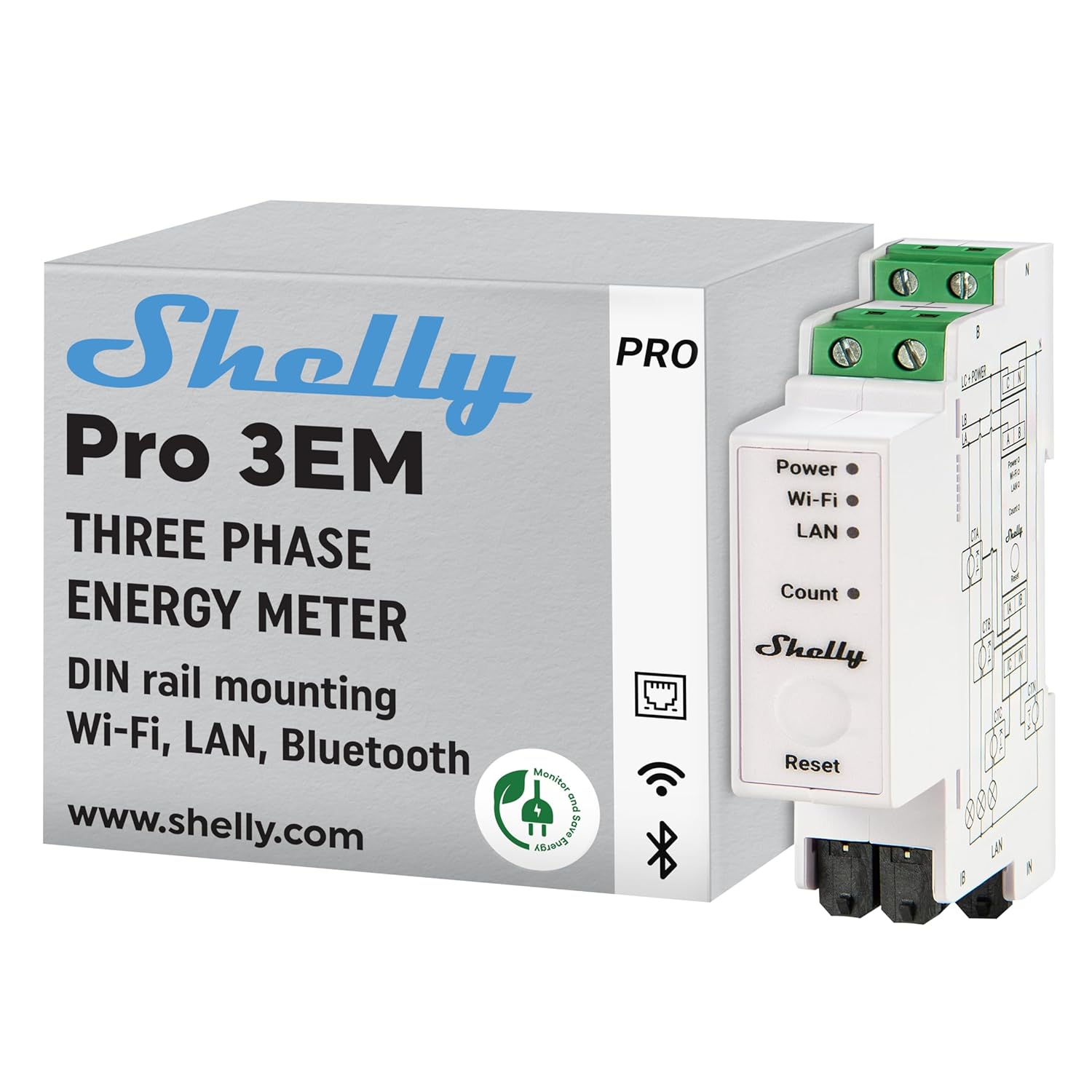
HomeWizard P1 if your meter has the port; an ESPHome-flashed Emporia Vue 3 or a Shelly Pro 3EM for US panels. Local-first solar energy monitoring in Home Assistant.
Build a local-first Home Assistant energy dashboard from scratch: real hardware (P1 meter, smart plugs, panel meters), how long-term statistics work, and turning kWh into decisions.